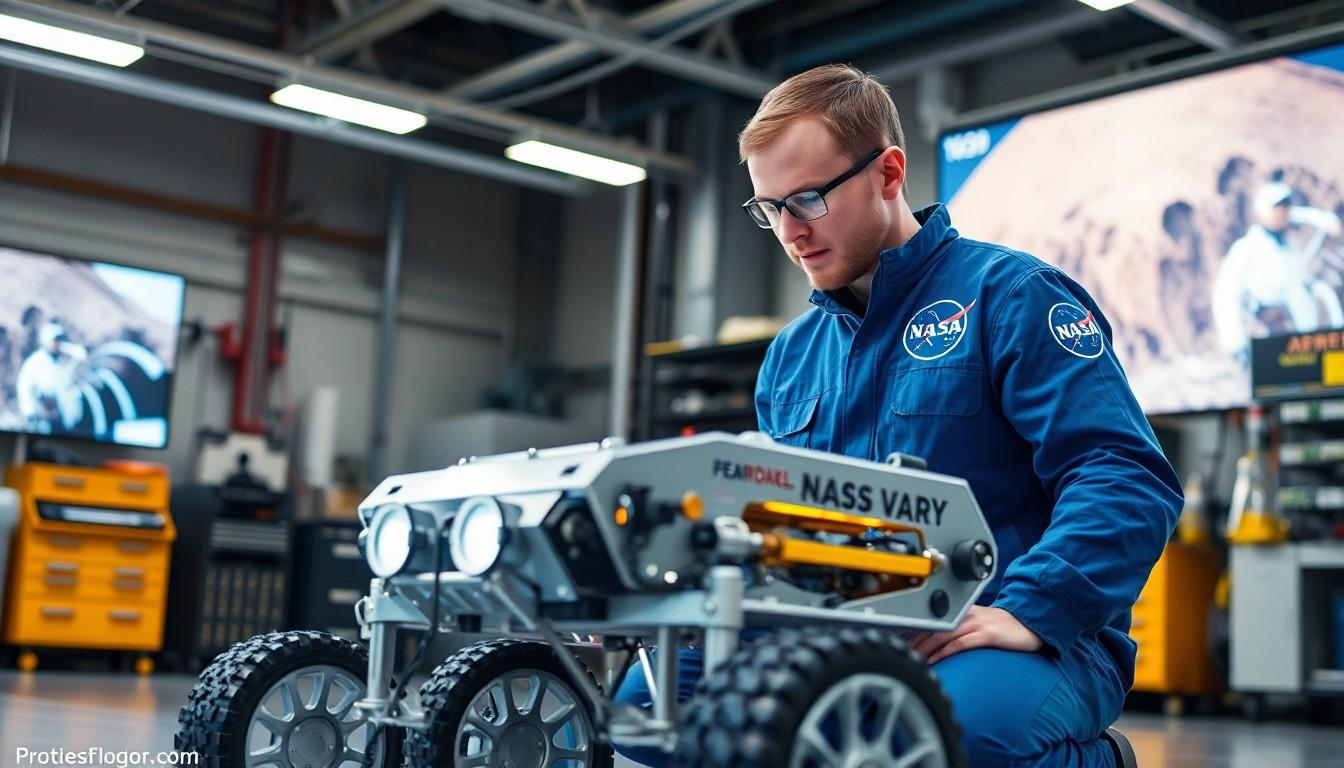
When it comes to space exploration, NASA is the rock star of the galaxy, and its latest tech news is the hottest ticket in town. From rovers that can dance on Mars to telescopes that peer into the depths of the universe, NASA’s innovations are nothing short of mind-blowing. If you thought your smartphone was impressive, wait until you see what they’re cooking up in the cosmos!
Latest Developments in NASA Space Technology
NASA continues to push the boundaries of space technology, showcasing advancements that enhance exploration capabilities and scientific discovery.
Overview of Recent Innovations
Innovations from NASA include the development of autonomous rovers that enhance navigation on harsh terrains like Mars. These rovers utilize cutting-edge artificial intelligence for improved decision-making. Another significant advancement is the James Webb Space Telescope, which provides unprecedented clarity and depth in imaging distant galaxies. Innovations in propulsion systems, such as ion thrusters, demonstrate remarkable efficiency for long-duration space missions. Sensors on spacecraft, designed for extreme conditions, promise better data collection and analysis. Together, these technologies enable deeper explorations and insights into the cosmos.
Highlights from Recent Missions
Recent missions have showcased groundbreaking technologies and achievements. The Perseverance rover successfully landed on Mars, equipped with advanced scientific instruments that analyze soil samples for signs of ancient life. Meanwhile, the Artemis program aims to return humans to the Moon, paving the way for future Mars missions. The Lunar Gateway project emphasizes sustainable lunar exploration, featuring a space station in orbit around the Moon for crew and robotic missions. Additionally, the Mars Sample Return mission is set to gather and return samples to Earth for comprehensive study. Each mission emphasizes NASA’s commitment to pushing the frontiers of space exploration.
Breakthroughs in Space Exploration

NASA consistently achieves remarkable advancements that significantly impact space exploration. The agency focuses on innovative technologies that enhance missions and expand human understanding.
New Propulsion Technologies
Efficient propulsion technologies play a vital role in expanding mission capabilities. NASA’s recent developments include ion propulsion systems, which offer greater thrust with lower propellant consumption. These systems support long-duration missions, enabling spacecraft to travel further into space. The agency’s Xenon ion engines demonstrate efficiency, using a fraction of the fuel compared to traditional rocket engines. Such advancements empower spacecraft to explore destinations like Mars or the outer planets, pushing boundaries in space exploration.
Advancements in Robotics
Robotic technologies drive exploration and scientific analysis on celestial bodies. NASA’s autonomous rovers feature advanced AI, allowing them to navigate complex terrains on Mars without human intervention. The Perseverance rover’s state-of-the-art instruments conduct in-depth analyses of Martian soil, providing crucial data. Recent robotic innovations also include the development of drones for aerial surveys of icy moons, enhancing our knowledge of these distant worlds. Robotics plays a central role in NASA’s strategy, increasing capabilities while reducing risks to human explorers.
NASA Collaborations and Partnerships
NASA builds strong connections with various organizations to advance space exploration and technology. Partnerships enhance the capabilities for missions and in-depth research.
Collaborations with Private Sector
Collaborating with private companies plays a crucial role in NASA’s strategy. NASA engages firms like SpaceX and Blue Origin to develop launch vehicles and spacecraft. These collaborations reduce costs and increase launch frequency. Significantly, the Commercial Crew Program allows NASA to utilize private spacecraft for transporting astronauts to the International Space Station. Innovative projects benefit both parties, emphasizing technology transfers and shared expertise. The partnership model fosters rapid advancements, allowing NASA to focus on deep-space exploration.
International Partnerships in Space Research
International collaborations expand scientific knowledge and enhance exploration efforts. NASA works with agencies like ESA, JAXA, and Roscosmos on various missions. These partnerships enable data sharing and joint technological development. Noteworthy projects include the Artemis program, which aims to return humans to the Moon with global contributions. Collaborative efforts, such as the Mars Sample Return mission, leverage expertise from around the world, improving mission success rates. Together, these alliances strengthen global cooperation in space research and exploration.
Future Directions in Space Technology
NASA continues to innovate, introducing new projects and initiatives that shape the future of space exploration.
Upcoming Projects and Initiatives
NASA plans to initiate several significant projects. The Artemis program aims to return humans to the Moon by 2024, paving the way for sustainable lunar exploration. Missions to explore asteroids, such as the Psyche mission, will provide insights into the solar system’s formation. The upcoming Lunar Gateway will serve as a key outpost for deep space missions. Innovative projects include the development of the next-generation Space Launch System, designed to carry astronauts and payloads beyond low Earth orbit. Each initiative reflects NASA’s commitment to enhancing capabilities and expanding frontiers.
Predictions for the Next Decade in Space Tech
In the next decade, advancements in space technology are expected to accelerate. Innovations in propulsion systems will significantly reduce travel times for missions to Mars. Enhanced artificial intelligence will allow rovers to perform tasks autonomously, improving efficiency in exploration. Increased collaboration with private space companies will lead to more frequent launches and lower costs. The rise of in-situ resource utilization technologies will support sustainable human presence on celestial bodies. Breakthroughs in communication technologies will further enhance data transmission across vast distances, making interplanetary communication more reliable. Each of these developments positions NASA as a leader in shaping the future of space exploration.
NASA’s relentless pursuit of innovation continues to redefine the landscape of space exploration. With each advancement in technology they make, they not only enhance their capabilities but also inspire future generations to dream bigger. The collaboration with private and international partners is paving the way for groundbreaking missions that promise to expand humanity’s reach into the cosmos.
As NASA embarks on ambitious projects like the Artemis program and asteroid exploration, the future of space technology looks brighter than ever. The commitment to sustainable exploration and the integration of cutting-edge technologies will undoubtedly lead to discoveries that deepen our understanding of the universe. NASA’s journey is just beginning, and the excitement surrounding their upcoming endeavors is palpable.