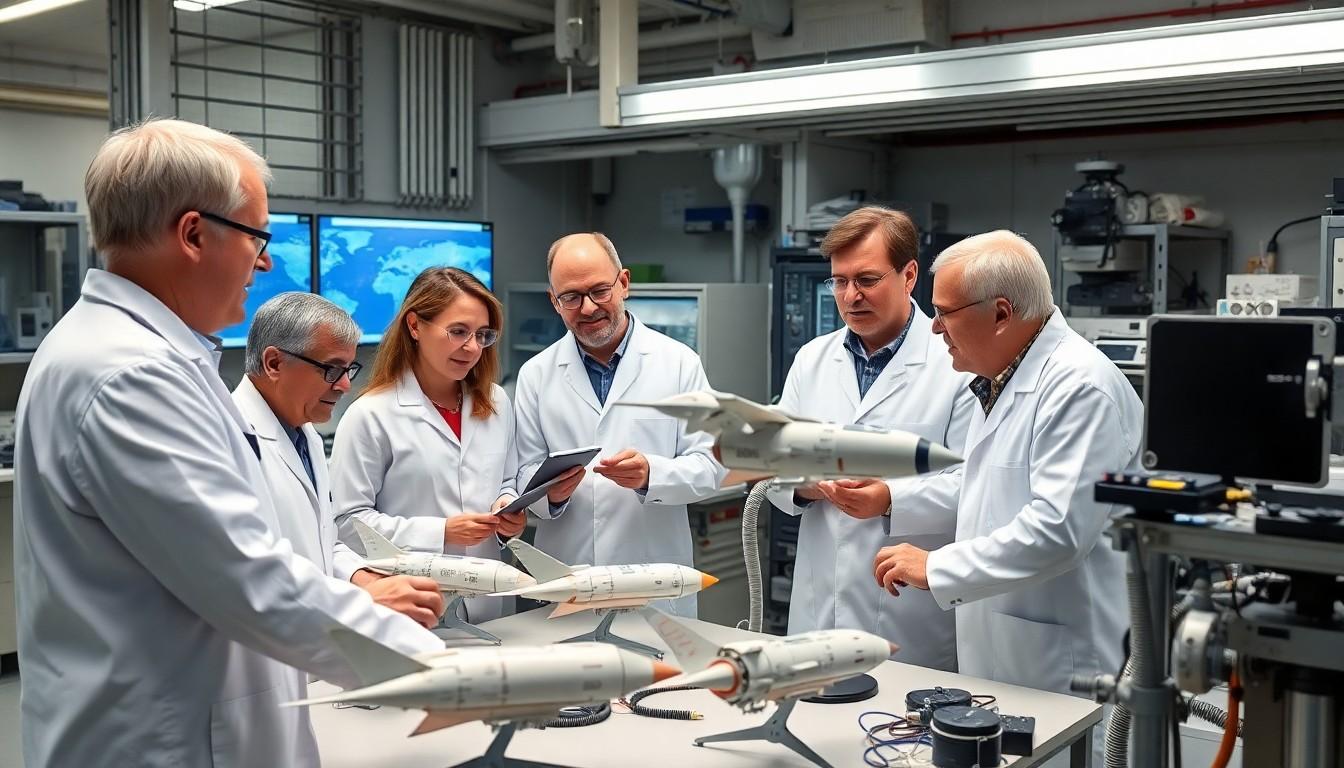
Nestled in the heart of the Netherlands, the European Space Research and Technology Centre (ESTEC) is where the magic of space exploration happens. It’s not just a building; it’s a launchpad for innovation, where dreams of interstellar travel and satellite communication come to life. Imagine engineers in lab coats tinkering with spacecraft while sipping coffee—now that’s a sight to behold!
Overview of European Space Research and Technology Centre
The European Space Research and Technology Centre (ESTEC) operates in Noordwijk, Netherlands. It serves as the primary technology center for the European Space Agency (ESA). Scientists and engineers collaborate on various space missions, focusing on satellite development and scientific research.
Innovative projects thrive within ESTEC’s walls. Each year, numerous spacecraft undergo testing and integration destined for Earth’s orbit and beyond. Notable missions including the Galileo satellite navigation system and the Mars Express highlight ESTEC’s contributions to space exploration. The center supports all phases of mission development, from concept design to operations.
Teams at ESTEC engage in numerous research areas. Aeronautics, Earth observation, and telecommunications benefit from collaborative efforts. Specialists employ cutting-edge technologies in robotics, materials science, and electronics to advance their research.
ESTEC hosts state-of-the-art facilities. Testing areas simulate harsh space environments, ensuring readiness for real-world conditions. These facilities allow for comprehensive validation of spacecraft before launch.
Training programs also play a vital role. Professionals enhance their skills through workshops and courses on emerging technologies, furthering ESA’s commitment to innovation. As part of the ESA’s overarching goals, ESTEC prioritizes sustainable development and international collaboration in space activities.
Partnerships with universities and industries enrich the research ecosystem. These collaborations provide valuable resources and expertise, creating opportunities for innovation and technological transfer within the European space community.
Objectives and Mission

The European Space Research and Technology Centre (ESTEC) aims to advance space exploration and technology. It serves as a key center for the European Space Agency (ESA), driving innovation through collaboration.
Research Focus Areas
ESTEC engages in multiple research focus areas including aeronautics, Earth observation, and telecommunications. Each area contributes to a broader understanding of space and its applications. Furthering knowledge in robotics, materials science, and electronics, the center supports the development of new technologies. Scientists at ESTEC conduct studies that enhance satellite capabilities and push the boundaries of scientific discovery. Valuable partnerships with universities and industries enrich the research initiatives.
Technological Innovations
Innovations at ESTEC manifest through various cutting-edge projects. The center utilizes state-of-the-art facilities designed to simulate the extreme conditions of space. Engineers ensure that spacecraft undergo rigorous testing to validate their performance before launch. Projects like the Galileo satellite navigation system showcase ESTEC’s commitment to advancing navigation technology. Training programs for professionals focus on emerging technologies, ensuring a skilled workforce ready to tackle future challenges.
Key Projects and Programs
The European Space Research and Technology Centre (ESTEC) engages in numerous significant projects and programs that drive advancements in space exploration and technology.
Earth Observation Missions
Earth observation missions focus on monitoring and understanding the planet’s environment. ESA’s Copernicus program leads these efforts, featuring a fleet of satellites that provide critical data for climate change, urban planning, and disaster management. Each satellite collects vast amounts of information, which assists in global efforts to address environmental issues. Notable satellites, such as Sentinel-1, employ radar technologies to track land movement and monitor deforestation, contributing valuable insights for researchers worldwide. By collaborating with various international agencies, ESTEC enhances the impact of these missions through data sharing and joint initiatives.
Mars Exploration Initiatives
Mars exploration initiatives aim to unlock the mysteries of the Red Planet. ESA’s Mars Express mission has provided invaluable data since its launch in 2003, revealing detailed maps of the Martian surface and atmosphere. In collaboration with NASA’s Perseverance rover, the ExoMars program seeks to identify signs of past life and prepare for future human missions. Each phase involves rigorous testing and validation of instruments, ensuring mission success and robust scientific outcomes. Through these collaborative efforts, ESTEC significantly advances the understanding of Martian geology and potential habitability, shaping the future of human exploration beyond Earth.
Collaborations and Partnerships
Collaborations and partnerships play a vital role at the European Space Research and Technology Centre (ESTEC), driving innovation and expanding capabilities in space exploration and technology development.
International Space Agencies
International collaboration forms the backbone of ESTEC’s mission. Partnerships with space agencies like NASA and Roscosmos enhance knowledge sharing and jointly leverage resources. Projects often involve coordinated missions, where agencies contribute specific technologies or expertise. For example, ESA collaborates with NASA on the Artemis program, aiming to return humans to the Moon. Collaborative efforts also extend to developing satellite technologies and joint research initiatives, fostering a global approach to pressing space challenges. This synergy accelerates advancements in space science, enabling broader exploration programs and operational efficiencies.
Academic Institutions
Academic institutions significantly contribute to ESTEC’s technological advancements. Collaborations with universities across Europe promote research and development in various fields, including aeronautics and materials science. These partnerships often yield innovative research projects that translate into practical applications for space missions. For instance, universities provide cutting-edge research on propulsion systems and satellite design. Additionally, internships and training programs link students with industry professionals, fostering skill development in the next generation of aerospace engineers. Such alliances ensure a continuous flow of expertise and fresh ideas, essential for maintaining innovation in the European space sector.
Impact on Space Exploration
European Space Research and Technology Centre (ESTEC) significantly influences space exploration through innovative projects and collaborations. Engineers develop and test advanced spacecraft technologies that enhance mission effectiveness. Notably, the Galileo satellite navigation system exemplifies how ESTEC supports accurate positioning and timing services, crucial for various applications on Earth.
Researchers at ESTEC focus on Earth observation and climate monitoring, especially through the Copernicus program. This initiative deploys a fleet of satellites to gather critical environmental data. Utilizing the Sentinel satellites, scientists gain insights into climate change impacts and disaster management strategies.
Mars exploration initiatives, such as the Mars Express mission and the ExoMars program, uncover valuable information about the Red Planet. These projects prepare for future human missions, showcasing ESTEC’s dedication to expanding humanity’s reach into the solar system.
Collaboration drives success at ESTEC. Partnerships with agencies like NASA and Roscosmos enable sharing resources and knowledge. The Artemis program illustrates this collaboration, aiming to return humans to the Moon while leveraging collective expertise.
Involvement with academic institutions enriches research and development efforts in aeronautics and materials science. Such partnerships yield innovative projects with practical applications for space missions. They also ensure a continuous flow of new ideas, which is essential for maintaining innovation within the European space sector.
Commitment to sustainable development shapes ESTEC’s approach to space exploration. The center prioritizes environmentally friendly practices and technologies. By fostering international cooperation, ESTEC remains at the forefront of advancements in space exploration, ultimately benefiting the global community.
Future Prospects
Innovations at the European Space Research and Technology Centre (ESTEC) promise to shape the future of space exploration significantly. Advanced programs, such as the Copernicus program, continue to enhance Earth observation capabilities, emphasizing climate monitoring. Upcoming missions, like those related to Mars exploration, focus on responding to the challenges of human spaceflight and the search for extraterrestrial life.
Collaboration remains vital for future advancements. Partnerships with agencies like NASA and Roscosmos expand research potential, enabling teams to leverage shared knowledge. Joint projects enhance resource utilization, bringing innovative technologies to the forefront of space missions.
Sustainability will play a crucial role in ESTEC’s future initiatives. Strategies emphasize developing environmentally friendly technologies, ensuring long-term viability in space activities. The center’s commitment to sustainable development aligns with global efforts to minimize the ecological impact of space exploration.
Training programs aim to cultivate a proficient workforce ready to meet the evolving demands of the aerospace sector. Skills enhancement ensures professionals grasp emerging technologies essential to future projects. Graduates from these programs contribute fresh ideas, driving innovation and advancements in space research.
As ESTEC continues to pursue high-impact projects, the focus on international collaboration drives progress. Scientific communities from various countries contribute insights and expertise, fostering an environment of collective discovery. New partnerships emerge, expanding the European space community’s reach and capabilities.
Prospects at ESTEC center around continued innovation, collaboration, and sustainability. The intersection of these factors positions the center to address future challenges and explore new horizons in space exploration.
The European Space Research and Technology Centre stands as a beacon of innovation and collaboration in space exploration. Its commitment to advancing technology and sustainable practices ensures that Europe remains at the forefront of space research. With ongoing projects like Copernicus and Mars missions, ESTEC is not only enhancing our understanding of the universe but also addressing critical global challenges like climate change.
The center’s emphasis on training and partnerships fosters a skilled workforce and encourages knowledge sharing across borders. As it continues to push the boundaries of what’s possible in space, ESTEC is set to play a pivotal role in shaping the future of space exploration for generations to come.